
1. Headings in the document
To provide quick answers, EbbotGPT divides your data sources into small chunks. Structuring the headings in your document helps EbbotGPT understand the context of each chunk, such as which document it belongs to and what part of the document it represents. EbbotGPT also uses headings to determine where to end one chunk and start another, ensuring that it doesn't cut off a sentence mid-way.
When a heading appears, it will remain in every chunk until a new heading of the same level replaces it.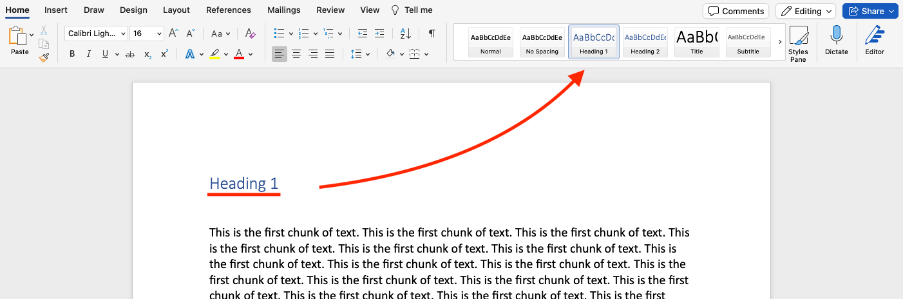
Here is an example of a text that will be split into two chunks to make sure that the chunks are not too long.
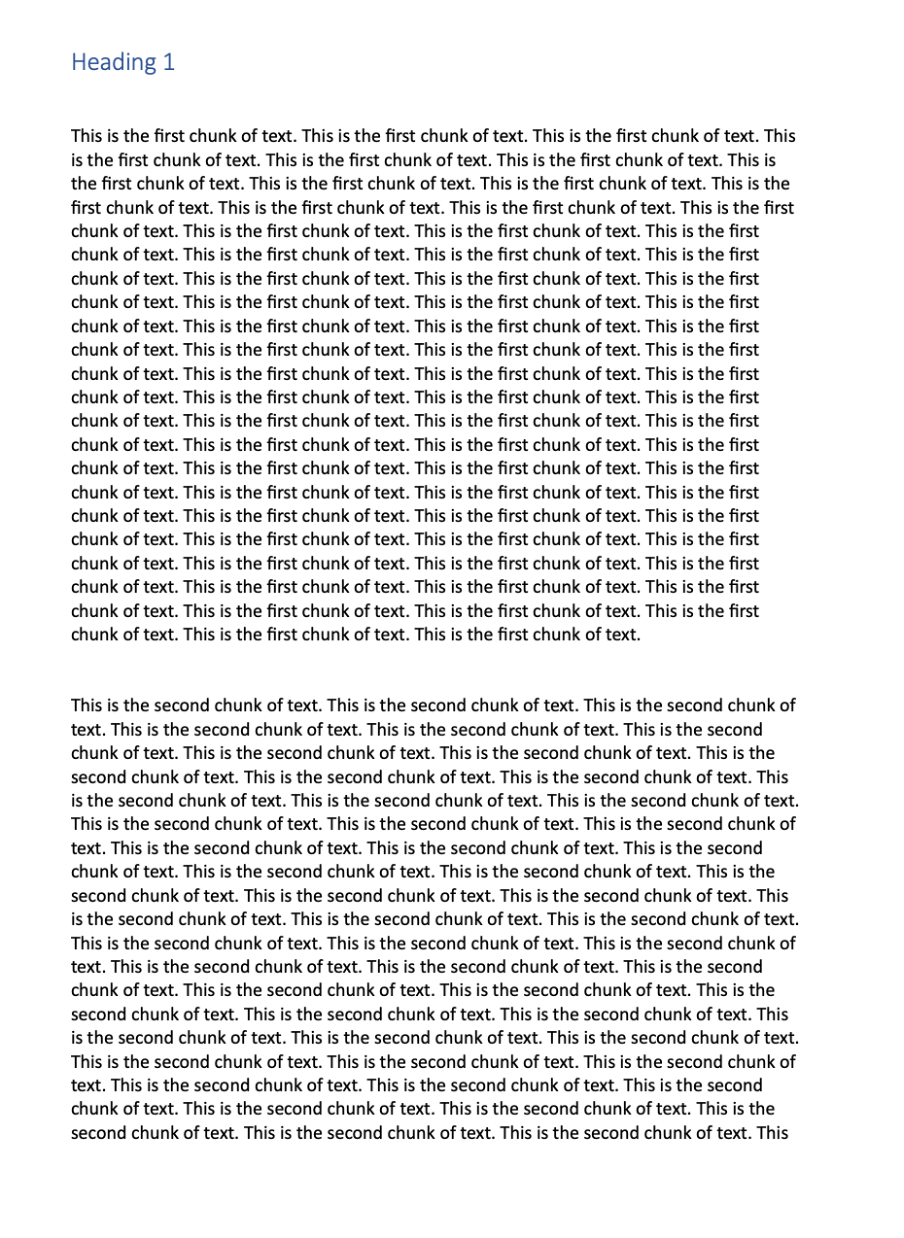 Even when the text is split into two chunks the heading will be included with each chunk of information, as seen below.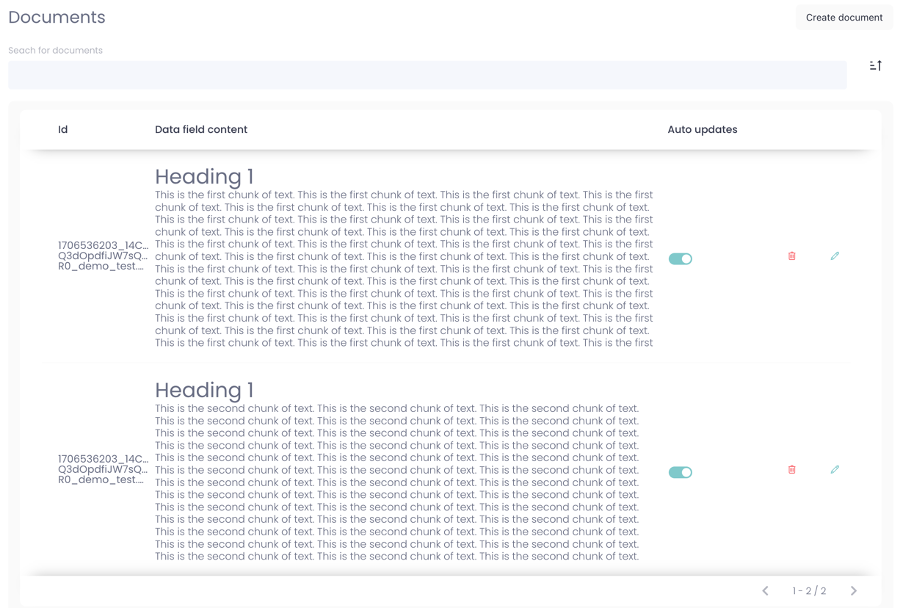
However, a more complex Word document will include more than one level of heading. That’s not a problem, the logic is the same for headings 1-4, meaning it will be added to each chunk until it has been replaced by a new heading of the same level. (Important, only heading 1-4 is readable by EbbotGPT, heading 5 or higher has no effect)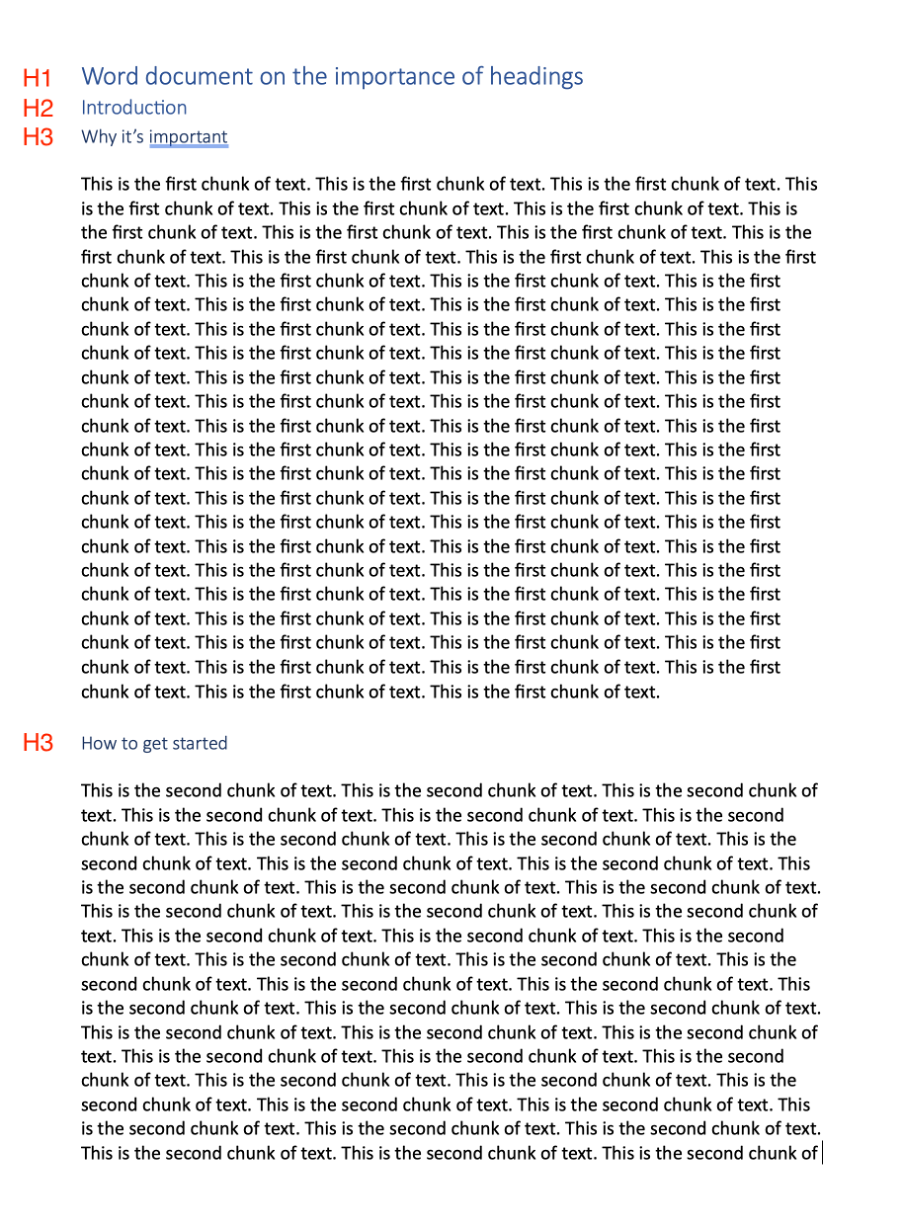 H1 and H2 will be added to both chunks since the document only has one of each. However, H3 is replaced as the second chunk has a new H3 that replaces the previous H3.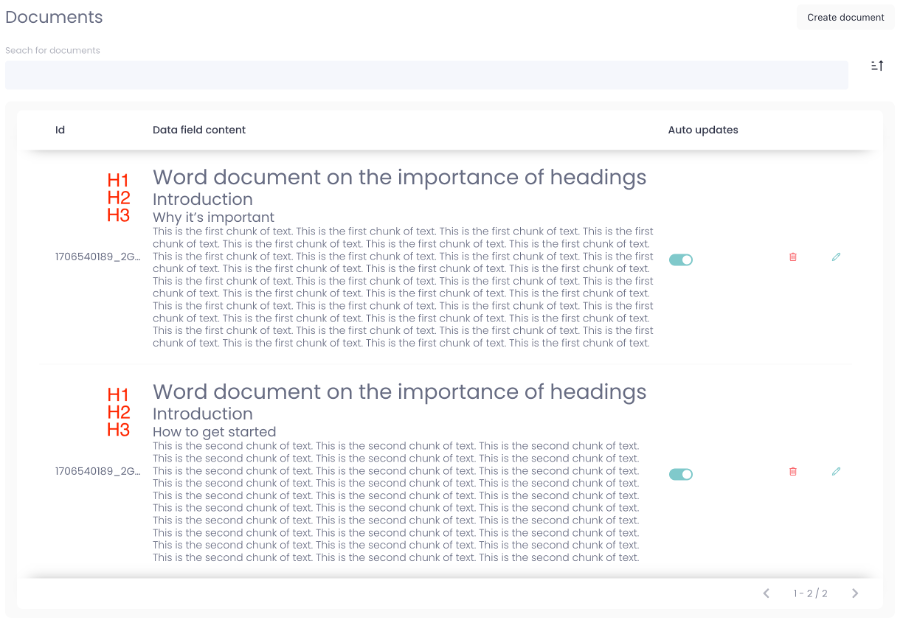
2. Tables and lists
Understanding lists and tables can be challenging for EbbotGPT. It's generally a good idea to upload your table or list and ask questions to see if EbbotGPT can provide answers based on the table or list.
If the answers are incorrect you can try to rewrite the list in a way that's easier for EbbotGPT to understand.
Table examples
Standard list
Car age class
A: 1 year
B: 2 years
C. 3 years
Easy list
Car age class A includes cars that are 1 year old
Car age class B includes cars that are 2 years old
Car age class C includes cars that are 3 years old